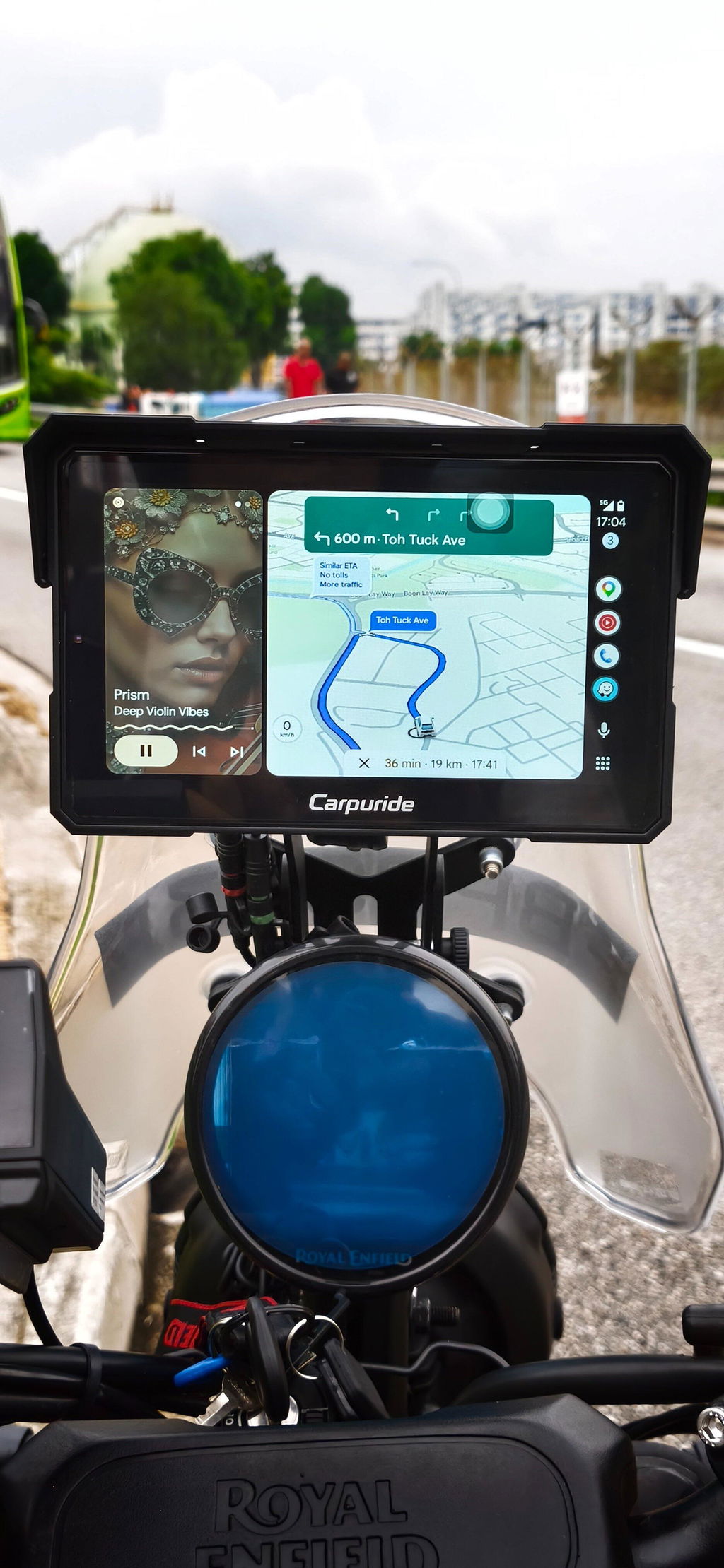
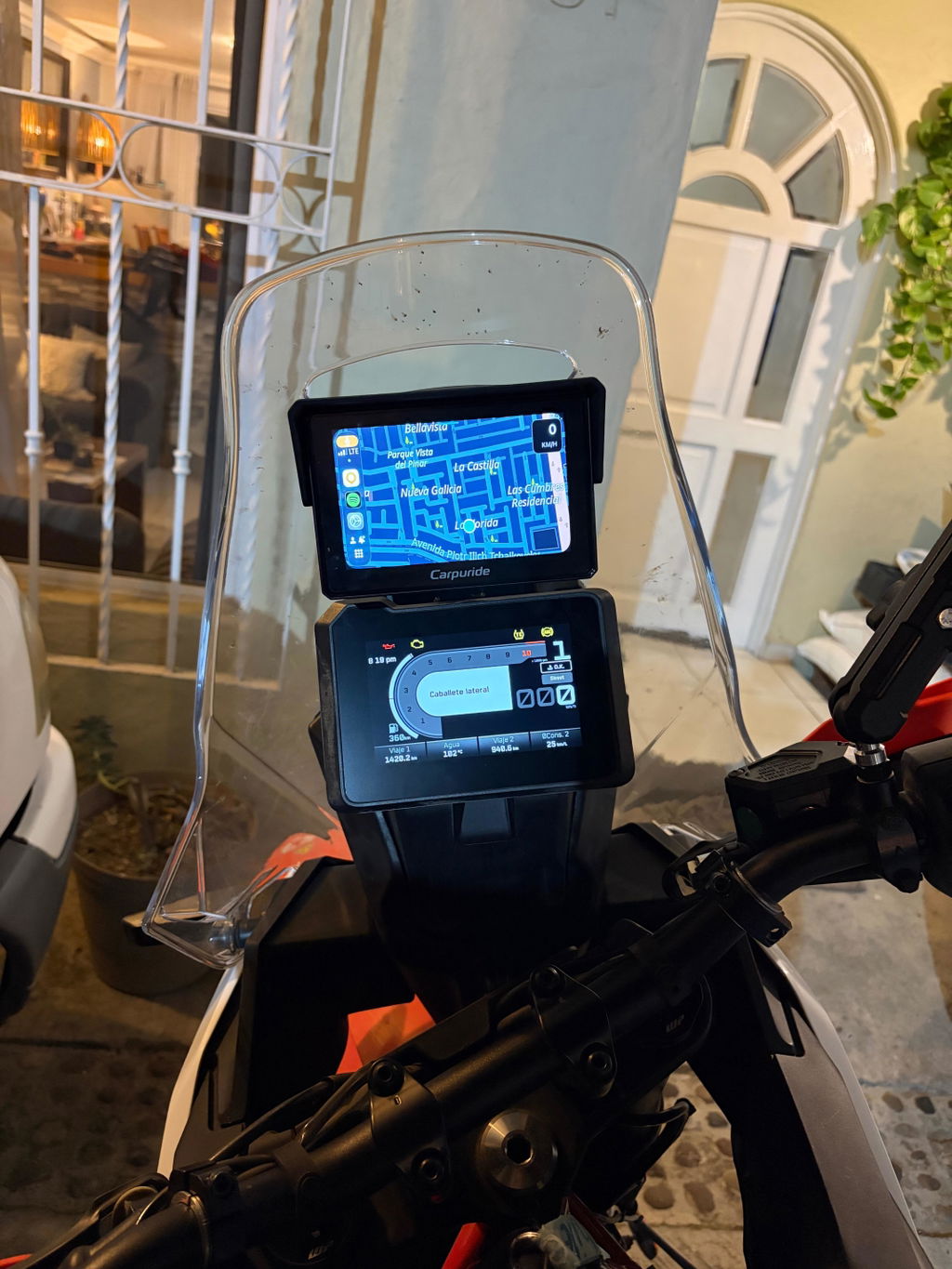
Readability in direct sun comes from four things you can check before buying: the nominal brightness of the panel, whether it has an automatic light sensor, the ingress protection that lets the display keep working in weather, and the angle you mount it at. A nits figure on its own does not settle the question, because a bright panel aimed into the sun still washes out.
What a nominal 1,000-nit rating does and does not tell you
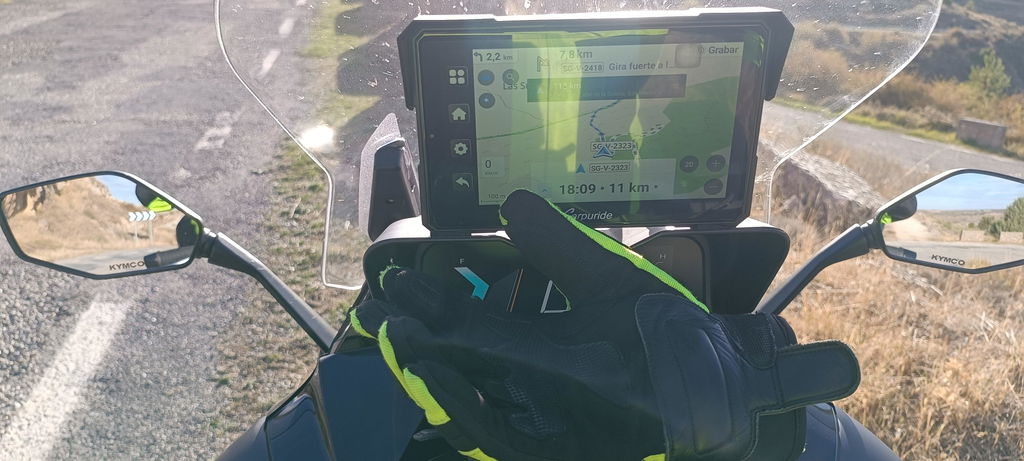
Carpuride states a nominal 1,000 nits for the 7-inch IPS panel on the W702S Plus, at 1024×600 resolution with 2.5D glass. The word to hold on to is nominal: it is the manufacturer-stated figure, not a measurement taken on your bike at noon with your visor down.
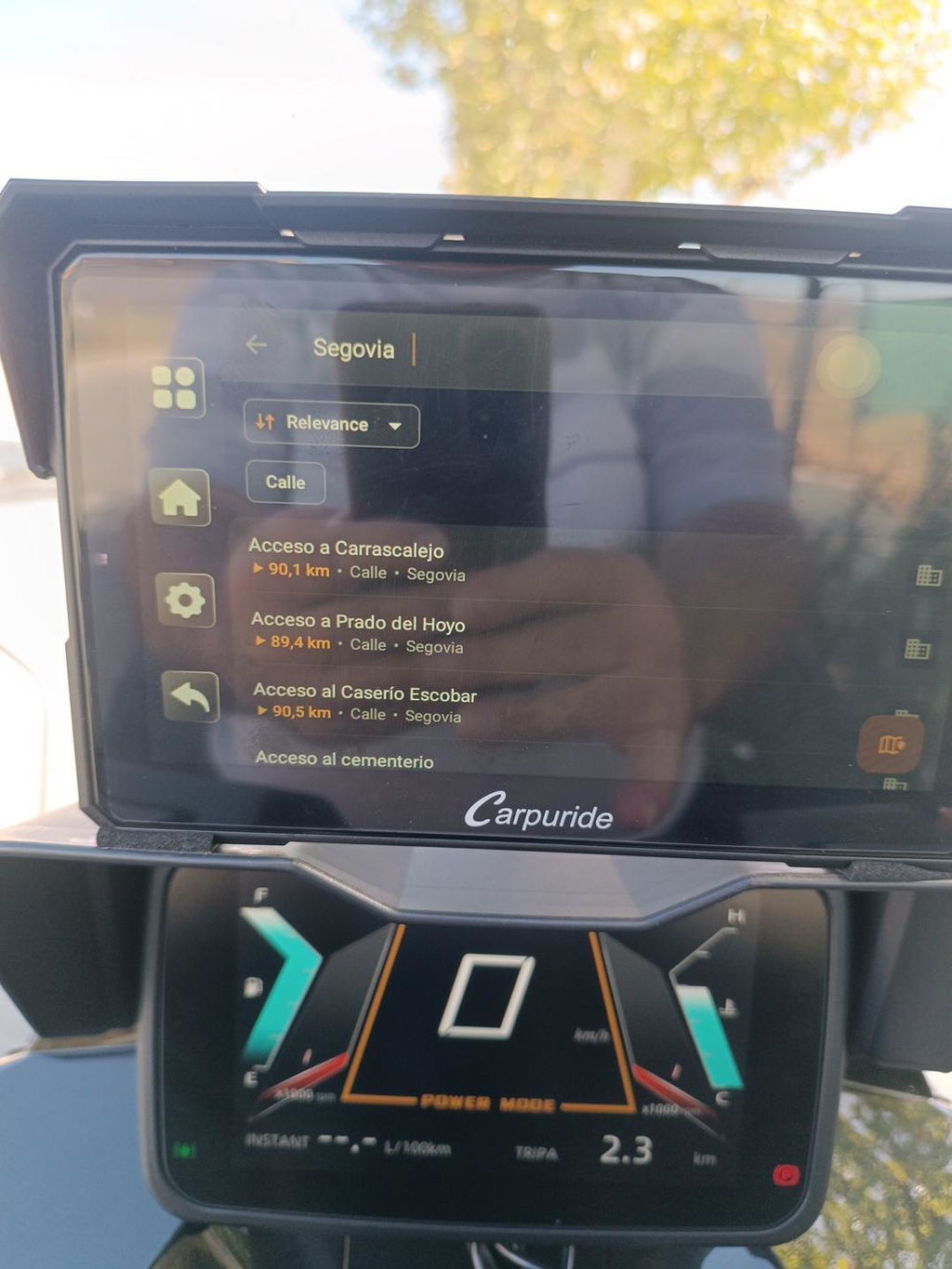
Three characteristics decide whether that figure translates into a readable screen. Panel type matters, because IPS retains contrast at an angle better than older twisted-nematic designs. Surface treatment matters, because a glossy cover reflects sky and helmet directly into your eye. And the antireflective behavior of the glass matters more than another hundred nits of output, which is why a sunshade in the box is not a trivial accessory.
Why the light sensor matters more than the peak number
A display that is readable at noon and blinding at night is not a usable display. Adaptive brightness is the mechanism that makes a bright panel practical: the sensor reads ambient light and adjusts output, so the screen does not stay at full power in a tunnel or after sunset.
On the W702S Plus, automatic brightness adjusts the screen to the ambient light. That matters for a specific reason: a screen that stays at full output at night is not a usable screen, and riders differ on how bright they want the display during a night leg.
Weather protection is part of readability
Water on the glass scatters light and turns a readable screen into a bright smear. IP67, which is the rating listed for the W702S Plus, means the housing is dust-tight and protected against temporary immersion. It is the level that lets the unit keep working in rain, and it is not a licence to pressure-wash the display or to leave it submerged.
The operating range is listed as −20°C to 60°C (−4°F to 140°F). That is a working range rather than a thermal performance claim: a black display sitting in direct summer sun will be hotter than ambient air, and no manufacturer can promise that any panel at any temperature looks identical.
Angle, glare and the sunshade
Two riders with the same unit can report opposite results because of geometry. Three adjustments are worth making before you blame the panel.
· Tilt the screen back slightly so the glass reflects sky above your helmet line rather than the horizon into your eyes.
· Fit the removable sunshade that ships with the W702S Plus. It cuts the light hitting the glass at midday, when the sun is closest to the reflection angle.
· Check your visor and its coating. A dark or polarized visor changes perceived brightness, and a scratched visor scatters light in a way no screen can fix.
Screen size and legibility at a glance
Legibility is partly a function of how far the screen is from your eye and how long you are willing to look away from the road. A 7-inch 1024×600 panel at handlebar distance shows a map with more label detail than a smaller 5-inch unit, which matters on a touring day where you read the next three turns at once rather than one arrow.
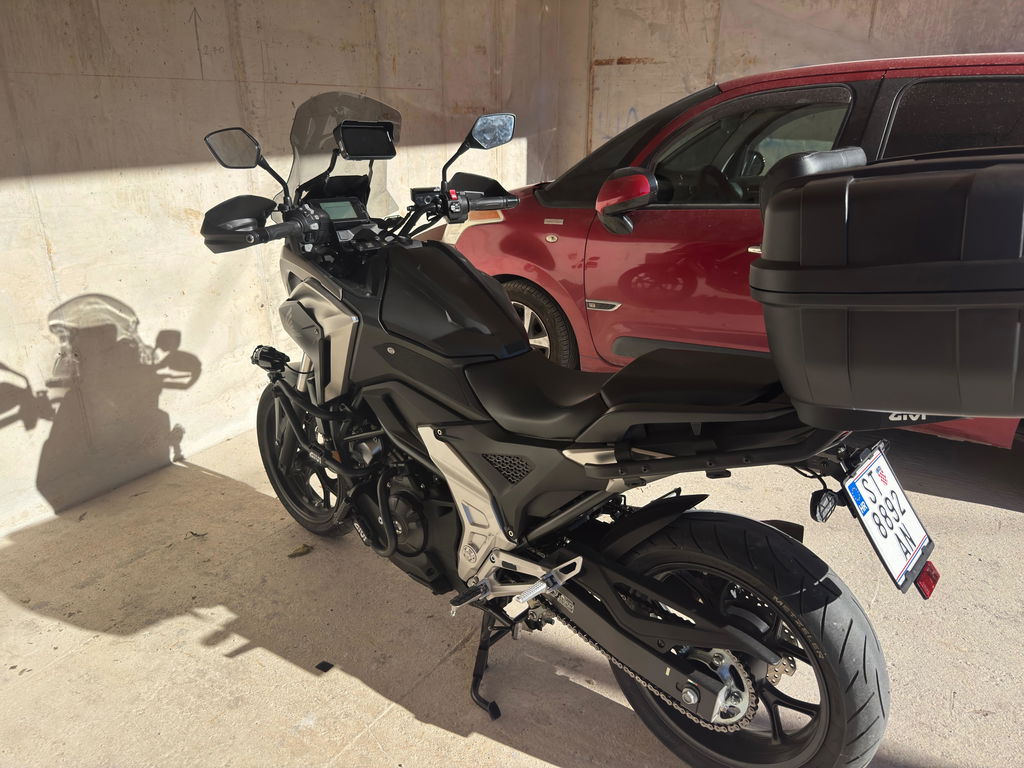
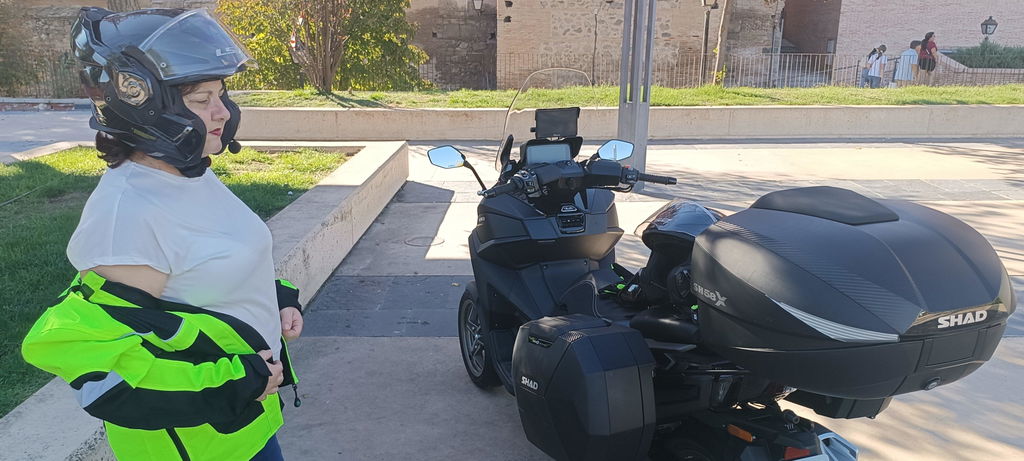
The trade is cockpit real estate. A 7-inch panel needs clearance at full steering lock and must not block the cluster or the master cylinder; on a narrow naked bike a 5-inch model is often the readable option simply because it can be positioned correctly. The practical rule is cockpit space first, screen size second.
Three ride profiles and what each one needs
| Ride profile | What readability actually requires | Practical setup |
| Daily commuting, mixed light | Fast recovery when you leave a garage into sun, and a dim screen at night | Adaptive brightness on, manual level tuned once, screen angled slightly down |
| Long-distance touring, all-day sun | Sustained contrast at midday, minimal reflection, readable at a glance so you look away briefly | Sunshade fitted, larger screen so label size is bigger, route planned before departure |
| Trail and gravel, dappled light | Rapid transitions between shade and glare, plus mud and water on the glass | Brightness high with manual control, sealed covers closed, controller within thumb reach |
Where the Carpuride W702S Plus fits on a long ride
It suits a rider who wants a 7-inch panel with a nominal 1,000 nits, automatic brightness, mounted on a dedicated BM05 quick-release bracket, running riding apps on the device with built-in GPS, and recording front and rear at 1080P as a secondary capability. IP67 and the −20°C to 60°C range cover the weather most touring riders meet.
It is not the answer for a cockpit with no room for a 7-inch screen, for a rider who only wants phone projection, or for anyone who expects a screen to be readable in every condition without adjustment. Readability is a setup outcome: the panel sets the ceiling, and mounting and brightness settings decide how close you get to it. If your phone is a HarmonyOS or Huawei EMUI P or Mate device, check the compatibility statement before anything else, because the wireless connection is not supported there.
Frequently asked questions
Is 1,000 nits enough in direct sunlight?
It is a nominal figure that Carpuride publishes for this panel, and in practice readability also depends on surface treatment, mounting angle and automatic brightness. Fit the sunshade and set the angle before judging it.
Does auto brightness work with a tinted visor?
The sensor responds to ambient light, not to what is between the glass and your eye. If a dark visor makes the screen feel dim, adjust the screen brightness setting rather than expecting the sensor to compensate.
Will a 7-inch screen be too big on a naked bike?
Check clearance with the handlebar turned fully in both directions. If the display blocks the instrument cluster or touches the tank, compare smaller models and confirm that the one you choose supports the features you need.
Can I leave the screen on the bike in rain?
The unit is rated IP67, which covers rain and temporary immersion. Route the power connector without tension and do not pressure-wash the display.